


22 Jan 2026 18:00 — 20:00
Location: SOLU
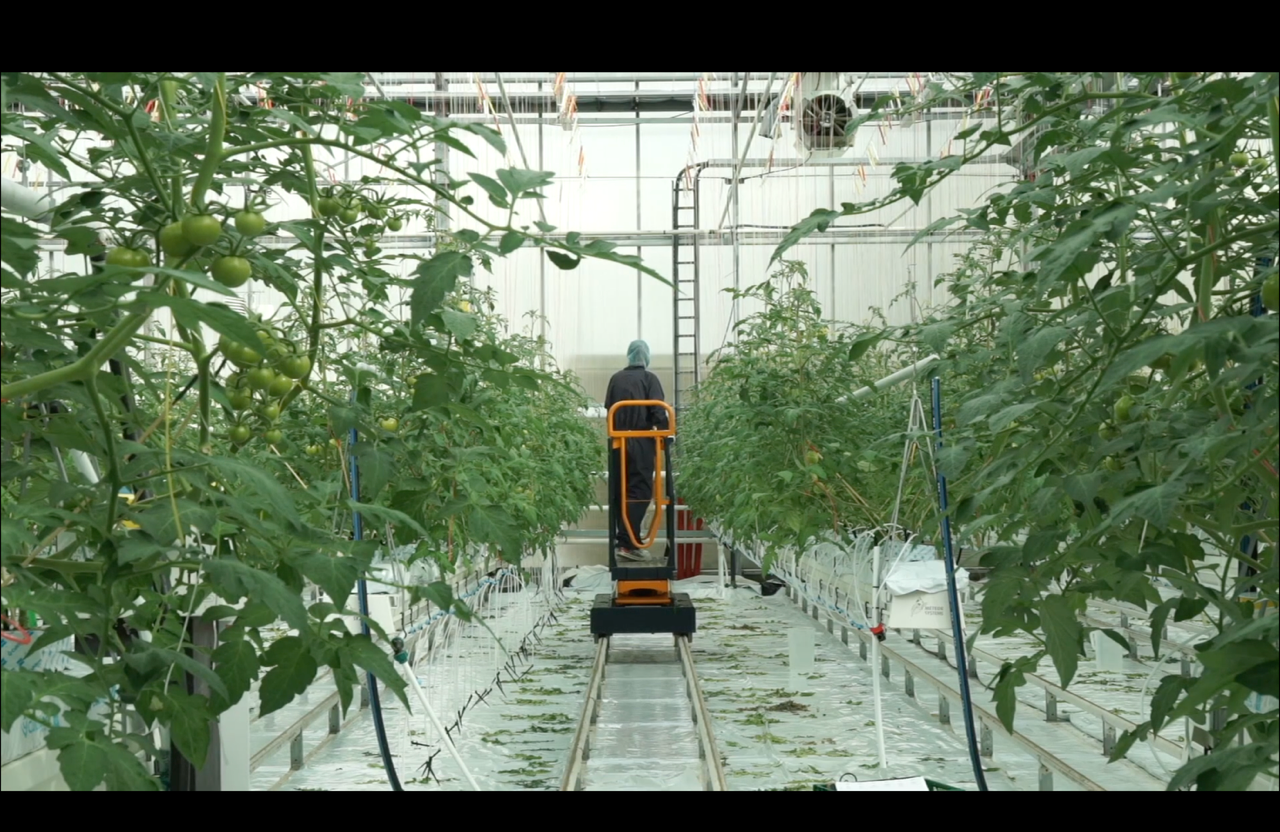
Image: Špela Petrič, Eating back: radio contamination, film still, 2025.
Panimokatu 1 (3rd floor), 00580 Helsinki
Join us on The Night of Science for an evening of films by artists working with artificial intelligence (AI), machine learning (ML) and synthetic biology (synbio). The screening features works of Roberta Gigante and Christina Stadlbauer, HSURAE, Špela Petrič and Laura Elidedt Rodriguez, artists in Bioart Society’s project deCYPher.
deCYPher brings together artificial intelligence, machine learning techniques and synthetic biology to develop bioprocesses for producing plant metabolites in a more economic and ecologically sustainable way. In the project Bioart Society works to integrate artistic and critical practices from the field of art & science and to stimulate deeper reflection about the convergence of AI/ML and synbio.
Central to this is the artist in residence programme, in which the artists featured in this screening have been working in the partners labs and facilities, developing interdisciplinary research in response to the project and producing a body of work for an exhibition towards the end of the project.
With this process still evolving, this screening shares moving image work from their wider practices as well as ongoing research part of the deCYPher project.
The films include:
Situated Knowledge (15 mins) by Laura Elidedt Rodriguez
Language/ Subtitles: English
This video work sits somewhere between an essay and a lecture. It shares my current working process during the Bioart Society residency, where I am collaborating with the deCYPher project.The video reflects on how scientific research is shaped not only by formal methods and protocols, but also by personal experiences, informal actions, and moments that fall outside official procedures. These often-unseen practices influence both the research itself and the outcomes of the residency.The project is now moving toward the creation of an alternative way of working: a counter-protocol based on rituals and practices of care. This speculative approach explores how such methods could exist within synthetic biology, imagining proteins not only as technical objects but as hybrid entities shaped by human, cultural, and scientific processes.
Feline Intelligence (6.06 mins) by HSURAE
Language/ Subtitles: English/Chinese
The desire to become Other. Non-human, trans-human, more-than-human. This desire is seductive, a primordial desire, arising from the soup of endosymbiosis. This desire is often framed as perverse, a taboo against the myth of the individual. In late capitalism it is not economical to understand that we are not in ourselves, we are through others. Always through others. Our agency is multitudinal and incommensurable. Our intelligence is distributed and collective. How do we model an intelligence that is not just machine learning to become brain? How do we develop othered kinds of intelligence?
Apiculus à la plage, to sex or not to sex by Roberta Gigante and Christina Stadlbauer
Language/ Subtitles: English
Apiculus à la plage, to sex or not to sex is a fungal pornofantasy that draws on real mycological strategies of attraction, fusion, refusal, cloning, courting at a distance, and homogamy. About the pull between needing only one self and becoming many selves in one. Through an imagined sensual life of mycelium, the film speculates on desire without bodies, intimacy without eyes, and on encounter and pleasure as a shifting spectrum rather than a rule. A collaboration between Roberta Gigante and Christina Stadlbauer.
Eating back: Radio Contamination (4.11) by Špela Petrič
Language/ Subtitles: Polish / English
Eating Back: Radio Contamination is one in a series of interventions created in response to insights from the artistic research of the Dutch horticultural sector. The research investigates how digital infrastructures are deployed in the care of living bodies and how they shape the relationships between entities living and working under their gaze. This particular intervention is devoted to migrant laborers at the intersection of their economic precarity, threat of job loss because of automation, and the pop radio soundscape dominating the interiors of greenhouses far and wide.
Field Notes Post-Terraformation (6.43 mins) by Laura Elidedt Rodriguez
Language/ Subtitles: English
This video work documents a situated exploration of soil health and mythology in Atyrau, developed in collaboration with curator and storyteller Daria Testo (Buryad-Mongolian, Khori Buryad) and soil scientist Daruen Kaliaskar (Kazakhstan). We co-created culturally and ecologically grounded guidelines for field exploration, attentive to more-than-human entities. The soils of Atyrau are approached as sites of terraformation, shaped by hegemonic histories of oil, gas, and colonial geoengineering that inscribe violence, extraction, and ecological vulnerability, while simultaneously holding resilience, memory, and forms of resistance embedded in traditional ecological knowledge. From this tension emerges the Code of Conduct for research with more-than-human beings, summarised in the video, which proposes a radical art-based research with more-than-human entities as co-authors and collaborators for the field exploration of future ecologies.
Artist bios:
HSURAE is an artist and educator based between New York and Taipei. Their practice embraces the concept of latency within nature and its artifice. Instead of working to reveal or accelerate, they find small pleasures in the indeterminacy that latent space and latent knowledge offers. Their current research entertains the irreducibility of artificial intelligence as an aesthetic quality—a quality that, like latency, resists total comprehension but invites speculation. They hold a Master of Science in Art, Culture, and Technology from MIT, and currently teaches at Shih Chien University and NYU.
Špela Petrič is a Slovenian hybrid media artist with a background in the natural sciences. Her artistic research and practice combines (bio)media and performativity to enact strange relations between bodies that question the underpinnings of our (bio)technological societies. Recently she has been looking closely at automation of care in agriculture and medicine.
Laura Elidedt Rodriguez is a multidisciplinary artist working between art, science, and speculative practices. Rooted in Mexican heritage, her work explores rituals, the synthesis of monsters, bodies, and more-than-human relationships through biotechnology, living systems, and storytelling. She is part of the collective Earthlings, engaging in collaborative fieldwork and ecological research that foregrounds care, situated knowledge, and interspecies entanglements. Based in the Netherlands, Laura teaches Biosemiotics in the master’s program Ecology Futures at Avans Hogeschool and develops projects that question extractivist narratives and imagine alternative modes of coexistence.
deCYPher partner associations include: Ghent University, Wageningen University & Research, The Spanish National Research Council, Isobionics, ML6, Biofaction, Lantana, VIB (the Flanders Institute for Biotechnology), Barcelona Super-computing Center and Bioart Society.
deCYPher connects with Bioindustry 4.0 as a synergy project in the framework of the Horizon Europe program in which Špela Petrič is an artist in residence.