Application form



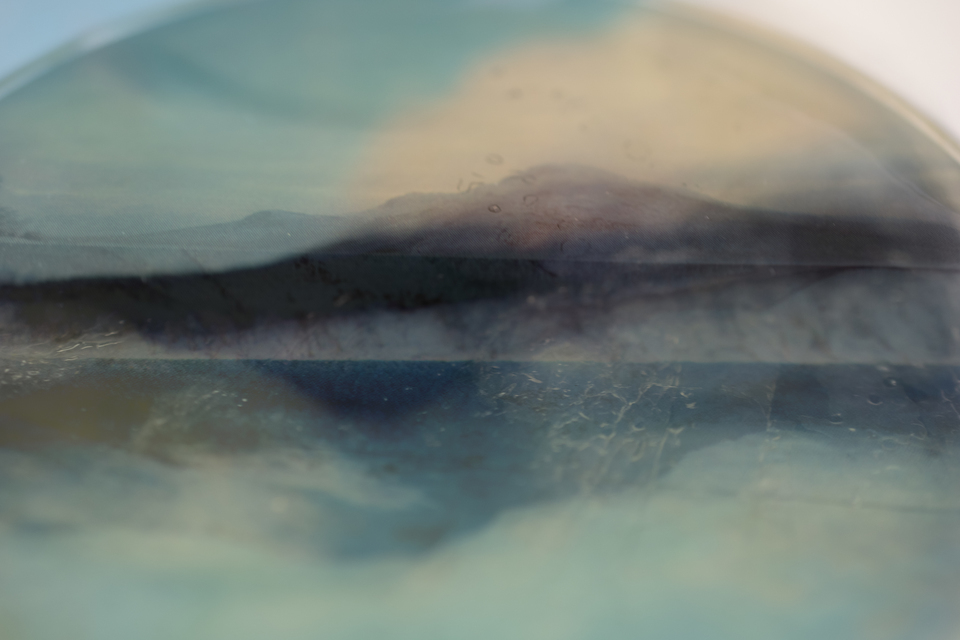
Image: Taylor Smith, who was in Ars Bioarctica residency in April 2021.
Open call: Ars Bioarctica residency programme at Kilpisjärvi Biological Station
October 2026 – November 2027
Bioart Society’s Ars Bioarctica fosters art-science research residencies, with a focus on responding to the subarctic environment and emergent ecological discourses. The locale’s unique ecology, social and economic cultures, as well as the scientific context and infrastructure of the Kilpisjärvi Biological Station act as a catalyst for site-sensitive research.
The station is home to numerous long-term monitoring initiatives, with the oldest—focused on vole populations—dating back to 1946. In addition to long-term monitoring, a wide range of research on land and water ecosystems is conducted, increasingly addressing the impacts of climate change.
As a setting of and for diverse research, the Ars Bioarctica has supported practitioners to explore a wide range of topics and methods, amongst others these include: ice and salt as living archives (1); geologic imaginations (2); multisensory engagements with regionally endangered lichens (3); liminality in tundra ecosystems and writing as embodied practice (4); rewilding the botanical gaze (5); atmospheric biosphere and ephemerality (6).
We welcome applications from artists, scientists and interdisciplinary researchers from varying backgrounds, locales and stages of practice.
Support & Expectations
Ars Bioarctica residencies are self funded and are best suited for independent research. Bioart Society manages the residency with the station, provides info sessions, a local mentor and remote studio visits with Bioart Society’s artistic director. While we can’t offer financial support, we can provide an invitation letter to the selected applicants to support funding applications.
Kilpisjärvi Biological Station grants residents access to their facilities and equipment including: scientific equipment and laboratory facilities (following inductions); the library and seminar room; shared living and working spaces; car upon agreement; and the possibility to reserve a sauna.
It is often possible to accompany the station’s staff in collecting data from long term monitoring sites. As fieldworking activities are largely seasonal, if there are specific research topics you would like to engage with please take this into account when considering the dates of your residency.
The cycles of research also impact the number of other researchers, scientists and visitors at the Station. Peak months are June–September and off-peak months are December-February, during the latter there might be less researchers present.
Ars Bioarctica fosters an environment for interdisciplinary exchange with other researchers at the Station, however collaborations are not to be expected for first time/short term residencies as it takes time to develop these relationships.
The Station staff offer guidance when they can, but their main line of work relates to their own research and activities.
Access
The main building has some narrower spaces where assistance may be needed to move around. Many of the interior doors are heavy fire doors and have thresholds. The main building’s guest rooms, visitor kitchen, office, laboratories, lecture space, library, laundry room, and canteen are all located on one floor. The soil laboratory is the most spacious and accessible of the station's laboratories, it can also be accessed from outside, and a ramp can be provided over the threshold. The station has an accessible toilet and accommodation designed for wheelchair users. An accessible parking space can be arranged, however the yard/ routes in general are mainly gravel and sand, and snowy in winter.
Please note that the 28 day residency is located 1km from the Kilpisjärvi Biological Station’s main building.
If you would like any further information about accessibility, or would like to discuss your access requirements in advance of making an application, please contact yvonne.billimore[at]bioartsociety.fi
Location/ Context
Bioart Society has been running the Ars Bioarctica residency programme in collaboration with Kilpisjärvi Biological Station of the University of Helsinki since 2009.
The residency takes place in the facilities of the Kilpisjärvi Biological Station, which is located in the village of Gilbbesjávri (Northern Sámi) / Kilpisjärvi (Finnish), in Sápmi—the cultural region of the Sámi people, stretching across the state borders of Norway, Sweden, Finland and Russia.
Situated on the Finnish side of Sámpi, where the border of Finland, Sweden and Norway meet, the village of Gilbbesjávri has a little over 170 inhabitants and limited amenities but a well stocked store. The region has a subarctic climate bordering closely on an alpine tundra climate with only one month above the 10° C (50° F) threshold. The climate and weather conditions in Gilbbesjávri vary greatly, so it is important to consider what kind of (field) work is possible in which season.
Bioart Society recognises that our residency programme takes place on the indigenous territory of the Sámi people and acknowledges that we are guests on this land. We ask our residents to do the same.
We discourage residents to treat the indigenous locale and peoples as a research thematic and do not accept applications which propose to do so. We encourage people to consider and respect this context, and to educate yourself on the ethics of researching in Sámpi before applying.
Dates
Due to the remote location and our desire to encourage longer term engagements in site responsive work, residencies are one month, but two week periods are also available. In the application, please specify which residency dates you are applying for. If these durations are an access barrier please indicate this in your application and we can make the required accommodations.
Residency period 1:
2 week residency: 2 Nov - 29 Nov, 2026
4 weeks residency: 2 Nov -15 Nov, 2026
(Research topics: Eddy covariance tower, Frost, Scientific fishing)
Residency period 2:
4 week residency: 11 Jan - 7 Feb, 2027
2 week residency: 11 Jan - 24 Jan, 2027
(Research topics: Eddy covariance tower, Frost)
Residency period 3:
4 week residency: 26 Feb - 26 Mar, 2027
2 week residency: 26 Feb - 12 Mar, 2027
(Research topics: Eddy covariance tower, Frost, Scientific fishing)
Residency period 4:
4 week residency: 3 May - 30 May, 2027
2 week residency: 3 May - 16 May, 2027
(Research topics: Birch seeds, Cavity nesting birds, Eddy covariance tower, Frost, Snow depth, Tick survey)
Residency period 5:
2 week residency: 12 - 25 July, 2027
(Research topics: Bilberry flowers, Birch seeds, Cavity nesting birds, Eddy covariance tower, Nocturnal butterflies, Snow depth, Tick survey)
Residency period 6:
4 week residency: 4 Oct - 31 Oct, 2027
2 week residency: 4 Oct - 17 Oct, 2027
(Research topics: Birch seeds, Eddy covariance tower, Frost)
Residency period 7:
4 week residency: 1 Nov - 28 Nov, 2027
2 week residency: 1 Nov - 14 Nov, 2027
(Research topics: Eddy covariance tower, Frost, Scientific fishing)
Costs
14 days: 499€ one person in a single room / 750€ duo in a double room
28 days: 670€ one person in a single room / 872€ duo in a double room
The rooms at the station vary. If you have accessibility needs, please indicate them in your application.
Application Process
The submission deadline is 28 February 2026, 23:55 EET
All applicants will be informed of the selections by 31 March 2026
Applications are submitted online via the form (at the bottom of this page). Those applying need to submit a research plan/motivation statement, portfolio and/or CV.
The selection panel includes members of the Bioart Society staff and board
For further questions, please send an email to yvonne.billimore[at]bioartsociety.fi
Further information
Ethical guidelines for research involving the Sámi people in Finland
You can find more information about the Kilpisjärvi Biological Station on their website